
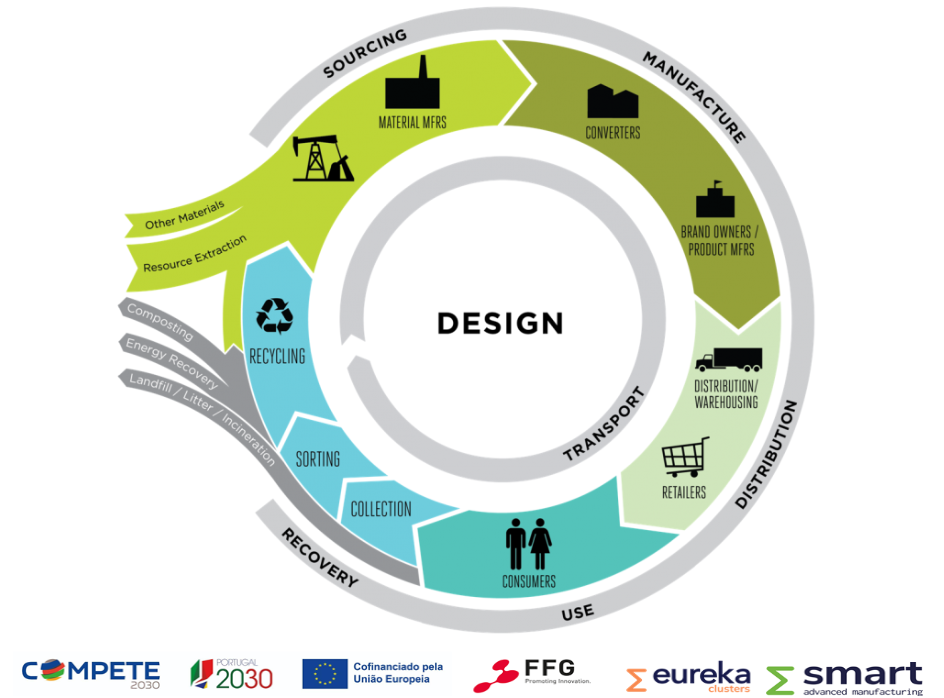
For a long time, limitations to product adoption focused on economic viability rather than on effects on the environment and society. With the growing awareness of the environmental consequences of rapid technological development, this is no longer acceptable. Everything has become important. The resources used in a process, water and energy among them, were always vital pieces of a complex technological puzzle. Now, they must be characterized according to source, production method, and location, as to truly understand the consequences of their use.
Which means, the question becomes, “is the process we wish to implement sustainable”?
To assess the sustainability of a process, one must first know what the term actually means. According to the European Environmental Agency, sustainability concerns meeting the needs of both present and future generations by creating systems that allow people to live well within the limits of the planet [1]. Any technological development should seek to operate within the boundaries of available resources, prioritize renewable materials and energy sources wherever possible, and optimize production systems to minimize waste, giving unavoidable waste a fitting end destination.
In this context, there is a need to apply methodologies and tools for Sustainability evaluation. One of the most well-known and widely adopted frameworks is Life Cycle Assessment or LCA. This methodology consists of the analysis of the entire Life cycle of a target product, process, or service, typically from the raw material extraction through production, use, and disposal [2]. This analysis is performed through a careful identification and quantification of inputs and outputs (also known as Life cycle inventory – LCI) in relation to a reference unit of the system, i.e., the Functional Unit (FU).
Table 1. Type of data generally required for LCA analysis development.
| Common LCA parameters | Type of data |
| Inputs | Raw material, water, electricity, heat, etc. |
| Outputs | Services, products, processes |
| Functional unit | Mass, volume, energy, monetary value, etc. |
While LCA is more commonly known in the context of Environmental sustainability, it actually considers what is referred to as the three pillars, i.e., environmental LCA (E-LCA), economic (LCC), or social (S-LCA). The main aim of these studies is to identify the key hotspots across the three areas, suggest meaningful trade-offs and optimization measures, and ultimately guide a given system towards a more balanced and responsible operating state within our ecosystem
How does LCA actually work?
Standardized under the ISO 14040, 14044, and 14075 frameworks, LCA follows a structured methodology encompassing four phases: goal and scope definition, inventory analysis, impact assessment, and interpretation [3]. This structure is common to both E-LCA, LCC and S-LCA, which simplifies greatly the characterization of both the system and its composing parts. Figure 1 summarizes the various stages.
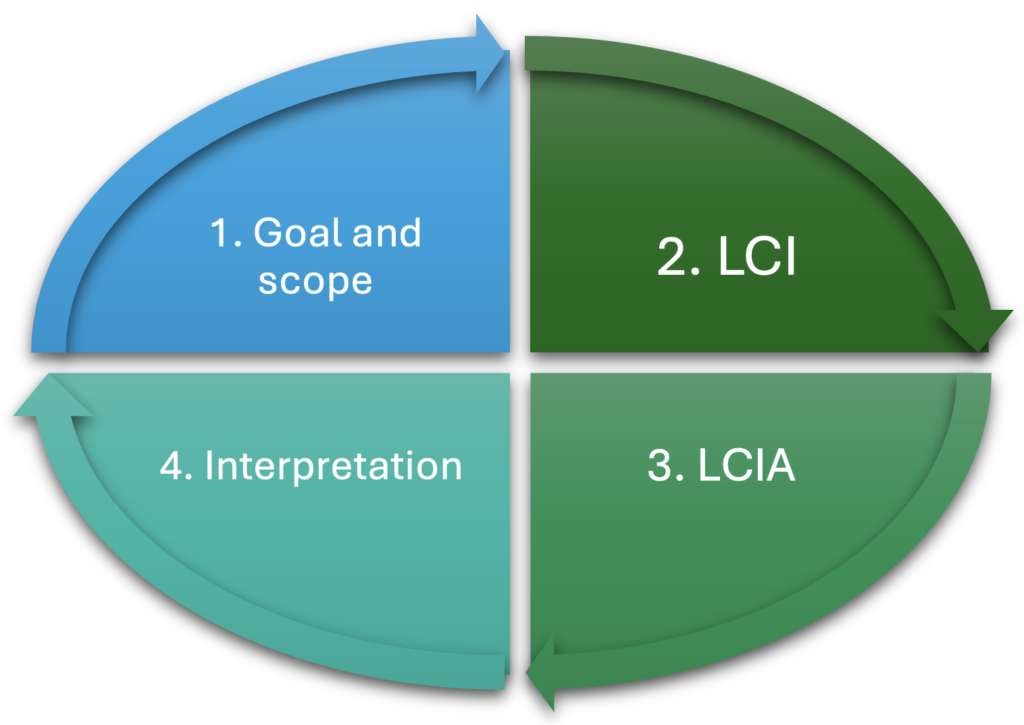
Figure 1. Depiction of the various stages of the development of a LCA study: 1) Goal and scope definition; 2) Life cycle inventory development; 3) Life cycle impact assessment and 4) Interpretation of the results.
i. Goal and Scope
The first stage of any LCA analysis must unequivocally define the intended application of the system, the purpose behind the study, the intended audience for the analysis, and how the results will be shared [3]. This stage also includes the definition of the system itself, including which stages and operations it contains and where it will be undertaken. This definition is constrained by the boundaries of the system. Under the LCA framework, these define where the practitioner will begin and end the analysis, i.e., which stages of the process will be included.
Table 2 depicts the common boundaries for an LCA analysis: cradle (raw material extraction), gate (both the entrance and exit of the production facility), and grave (disposal of the product after use).
Table 2. Definition of common boundaries considered in LCA studies.
| LCA boundaries | Definition |
|---|---|
| Cradle to Gate | From raw material extraction up until the exit of the production facility |
| Gate to Gate | Encompasses solely the process undertaken by the production facility |
| Cradle to Grave | From raw material extraction up until the disposal of the product after use |
| Gate to grave | Considers the use of the product after distribution and use and up until its disposal |
| Cradle to cradle | Encompasses all stages from raw material extraction, conversion, distribution, use, treatment or conversion into a new raw material |
This stage must also define the Functional unit to be used, as this variable will be the reference point to which all process units will respond to. As an example, if the FU was defined as 1 kg of product, then all inputs, outputs and results of the assessment will be calculated as to obtain 1 kg of product.
ii. Life cycle inventory
This stage consists in the identification and physical characterization of all inputs and outputs of the process according to the previously defined information. This data can range from the amounts of raw materials, chemical reactants, energy and water requirements, and emissions to land, water and air, among others [3]. All data must refer to the FU in use.Life cycle impact assessment
iii. Life cycle impact assessment
The LCIA phase consists of the actual calculation of these impacts. The various inputs and outputs quantified in the LCI can be characterized using specific databases such as Ecoinvent, Agribalyse, and PSILCA, among others, i.e., each item of the inventory, if contained in the database, can be directly connected to relevant impact categories. This data is then converted into a common unit within its respective category through the use of characterization factors [3].
The selection of an impact assessment method, such as ReCiPe, CML, or TRACI, is itself a critical methodological decision, as different methods define different impact categories and characterization factors, and may therefore yield divergent results even when applied to the same inventory data [4]. For example, the Product Environmental Footprint (PEF) method quantifies a total of 16 impact categories, including Climate Change, Acidification, and Eutrophication. The first of these, for instance, can be compared with the Global Warming Potential category in the IPCC methodology, as both are expressed using the metric kg of CO2 per FU. It is important to understand, however, that different methods consider different impact factors, and that for any comparison to be valid, systems should ideally be assessed under the same method.
iv. Interpretation
The final stage of any LCA analysis consists, as the name implies, in the interpretation of the results obtained. Impact values do not make sense without a context (Figure 2). If the process is an optimization of an established system, how does the environmental, economic or social performance compare to the original process? In the interpretation stage, the quantified impacts are once again related to the goal and scope, hotspots of the process are identified (as in, which stages or components of the assessed system are responsible for the greater shares of quantified impacts) and optimization routes can be suggested whenever possible [3].
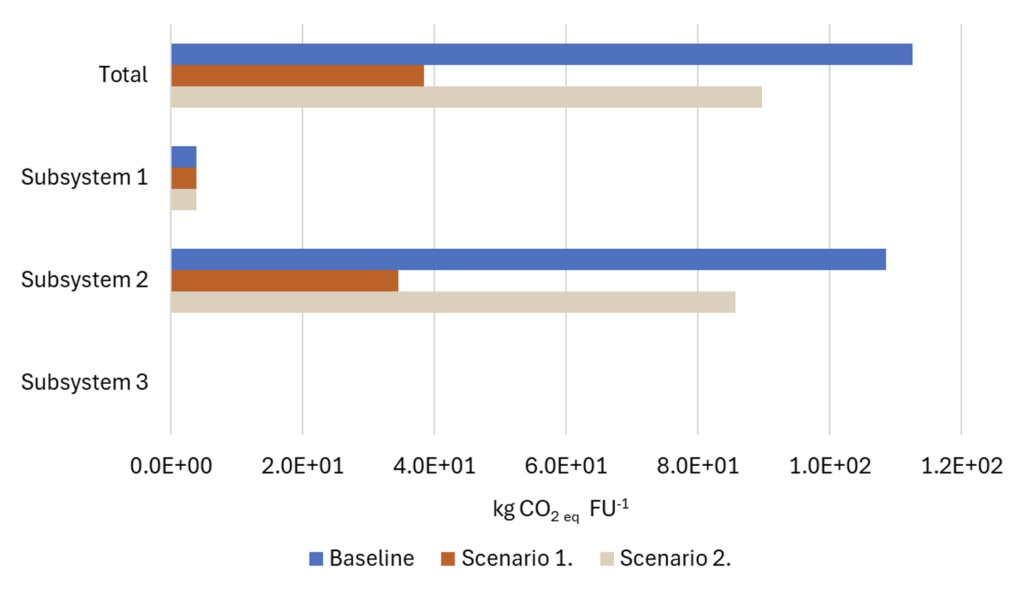
Figure 2. Representation of the Climate Change category assessment of a generic production process. Baseline: Reference production system; Scenario 1 and 2: optimization scenarios. Subsystem 1-3 represent stages of the production process and can contain one or more process units.
How does this relate to orthopaedic implants?
As with any product or service, the fabrication, implantation, use, and disposal of titanium prosthesis have environmental, economic, and social impacts associated with it. Economic viability is assured by its specialized market and well-established production process [5]. Social performance is yet to be ascertained, to the best of the author’s knowledge. The environmental performance of prosthesis manufacturing, however, is an issue. Titanium alloy prosthesis production relies on titanium as their main raw material, which is associated with substantial embodied environmental impacts. Titanium can be obtained from two primary mineral sources: rutile (TiO2) and ilmenite (FeTiO3), the first of which is the most common source of market titanium [6]. Its extraction requires a myriad of unit processes, such as drum, electrostatic, and magnetic separation, to remove the TiO2 from other components and impurities. After the separation stage, this compound is chlorinated and reduced with magnesium to obtain pure titanium, which is then alloyed with the desired metals to produce the final workpiece.
The process inventory is composed of inputs such as aluminium, chlorine, vanadium, and coke, among others, all of which are characterized by relatively high environmental impacts and leave very little room for process optimization. Furthermore, it must be considered that some unit processes require higher temperature conditions, implying large energy requirements across the board [7]. To summarize, the production of the titanium workpiece alone is characterized by poor environmental performance with limited potential for optimization.
Prosthesis production methods can be divided into two types: conventional manufacturing and additive manufacturing (AM) [8]. The most common conventional manufacturing method for prosthesis production involves casting and milling, a machining process which consists of subtracting material from a workpiece until the final geometry is obtained. This method has considerable energy requirements, but its main issue lies in the material waste, as the workpiece has to be considerably larger than the final product in order to reach the desired size. Theoretically, the subtracted material can be recycled, but with the increasing number of unit processes, the level of impurities contained in the material also increases. Therefore, its use as raw material to produce a new workpiece is no longer possible, and this recycled stream must be directed towards less stringent uses [9]. Each gram of wasted material represents more material that needs to be produced and, consequently, higher environmental impacts.
AM methods were developed to address this issue [8]. Unlike conventional manufacturing, there is no need to fabricate a piece larger than the required item. The alloy is converted into powder through various methodologies and then deposited, layer-by-layer, under controlled conditions, according to the developed design. Not only is the potential for material savings considerable, but any material wasted during the process is also likely to contain fewer impurities, thereby permitting its recycling back into the production unit.
It is here that LCA analysis becomes vital. Through its methodology, it is possible to compare both manufacturing processes, identify which stages are problematic, suggest possible optimization measures to be discussed with producers, and ultimately answer the key question: is it better for the environment to adopt a new technology for prosthesis manufacturing? Is the material savings achieved through AM production sufficient to improve efficiency, prevent material waste, and enhance potential recycling? By looking beyond the final prosthesis and into its full life cycle, ADAPT aims to understand whether innovation in prosthesis manufacturing can also translate into environmental progress.
References:
[1] https://www.eea.europa.eu/en, consulted 07/2026
[2] Hauschild, M.Z. (2018). Introduction to LCA Methodology. In: Hauschild, M., Rosenbaum, R., Olsen, S. (eds) Life Cycle Assessment. Springer, Cham. https://doi.org/10.1007/978-3-319-56475-3_6
[3] International Standard Organization, ISO 14040:2006, Environmental management – Life cycle assessment – Principles and framework, Edition 2, 2006.
[4] Chlela, S., Selosse, S. Life Cycle Assessment and System Integration of Carbon Dioxide Removal: Addressing Challenges in Environmental Evaluation and Model Representation. Curr Sustainable Renewable Energy Rep 12, 21 (2025). https://doi.org/10.1007/s40518-025-00271-y
[5] Donnelley, C.A., Shirley, C., Von Kaeppler, E.P., Hetherington, A., Albright, P.D., Morshed, S. and Shearer, D.W. Cost analyses of prosthesis devices: a systematic review. Archives of physical medicine and rehabilitation, 102(7), 1404-1415, (2021). https://doi.org/10.1016/j.apmr.2021.02.010
[6] Lyons, R., Newell, A., Ghadimi, P. et al. Environmental impacts of conventional and additive manufacturing for the production of Ti-6Al-4V knee implant: a life cycle approach. Int J Adv Manuf Technol 112, 787–801 (2021). https://doi.org/10.1007/s00170-020-06367-7
[7] Cáceres, C., Espinoza-Pérez, L., Espinoza-Pérez, A.T., Velastín, N., Dávila, S. and Santander, P. Analysis of the environmental impacts generated by an upper limb prosthesis: Design for children, adolescents and adults. Sustainable Production and Consumption, 58, 151-164, (2025). https://doi.org/10.1016/j.spc.2025.06.002
[8] Anspach, R.L., Gill, H.S., Dhokia, V. et al. High tibial osteotomy and additive manufacture can significantly reduce the climate impact of surgically treating knee osteoarthritis. Int J Life Cycle Assess 30, 1651–1665 (2025). https://doi.org/10.1007/s11367-025-02473-4
[9] Dhiman, S., Joshi, R.S., Singh, S., Gill, S.S., Singh, H., Kumar, R. and Kumar, V. Recycling of Ti6Al4V machining swarf into additive manufacturing feedstock powder to realise sustainable recycling goals. Journal of Cleaner Production, 348, 131-342, (2022). https://doi.org/10.1016/j.jclepro.2022.131342
This article was written by Helena Monteiro and Joana Ortigueira from ISQ Portugal.