
When it comes to 3D printing customized orthopedic implants, the quality of the final implant starts long before the manufacturing process itself – it starts with the metal powder.
As part of the ADAPT project, understanding how metal powders behave, how their quality can be assessed, and how they can be safely reused or recycled is essential to support reliable, efficient, and sustainable additive manufacturing. The characteristics of the powder can directly influence manufacturing consistency, part performance, safety and cost, making powder quality a critical factor throughout the production process
1. Metal/Metal alloy Powders
Metal powder is a finely divided form of metal or metal alloy consisting of small particles. These particles can vary in size, shape, chemical composition, surface condition, and flow behavior depending on the intended application.
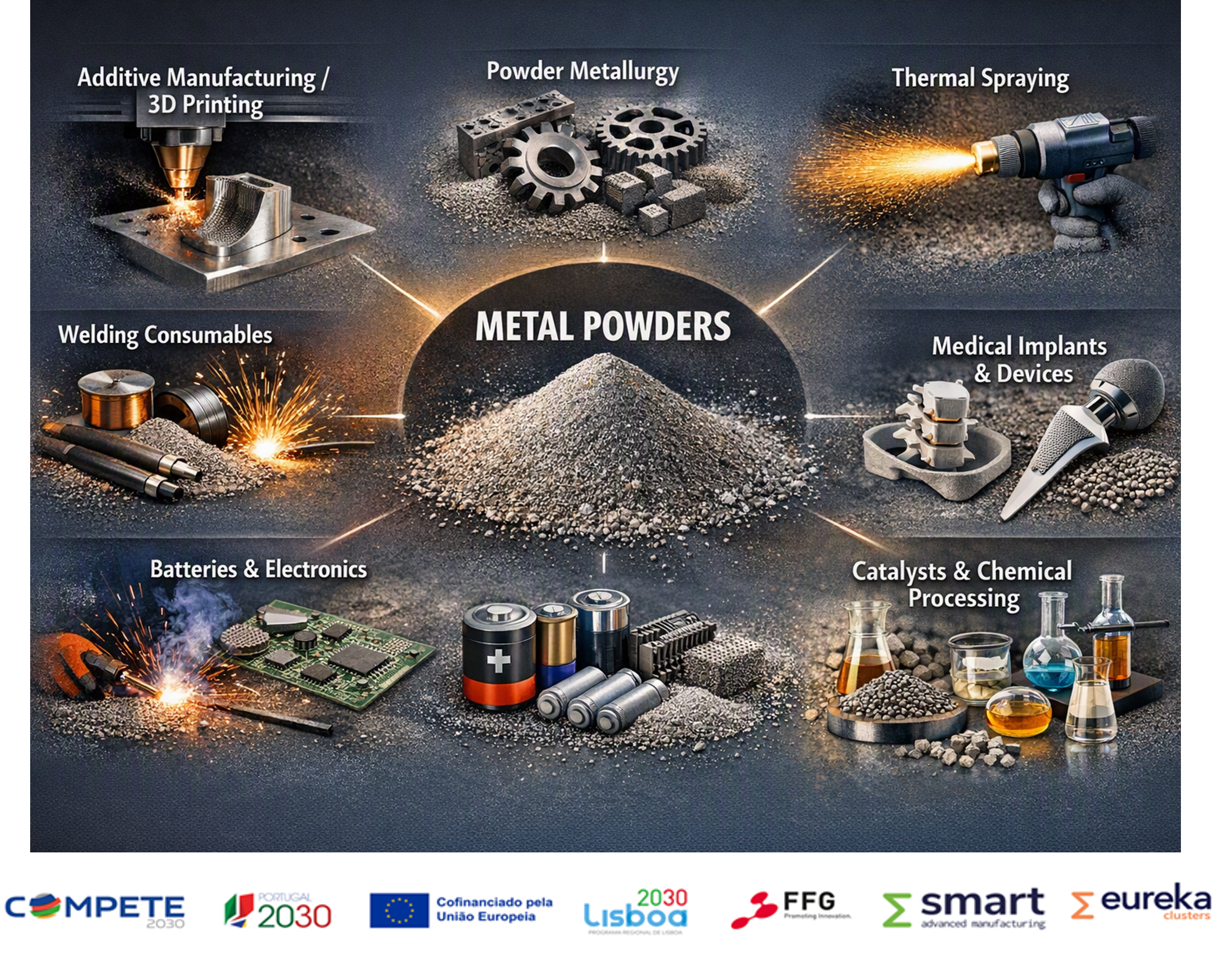
1.1 Metal powders are used in many industries, including:
- Additive manufacturing / 3D printing
- Powder metallurgy
- Metal injection molding
- Thermal spraying
- Welding consumables
- Batteries and electronics
- Aerospace and automotive components
- Medical implants and devices
- Catalysts and chemical processing
Common metal powders include:
- Iron and steel powders
- Aluminum powders
- Titanium powders
- Nickel and nickel alloys
- Copper powders
- Cobalt-chromium alloys
- Stainless steel powders
- Tungsten, molybdenum, and refractory metal powders
Metal powders are important because they allow manufacturers to create parts with complex shapes, controlled porosity, high material efficiency, and specialized mechanical or physical properties.
2. What is Metal Powder Quality? Why is it important
Metal powder quality means how well a powder meets the needs of a certain manufacturing process and the final product. A powder that works well for one use might not be good for another. So, quality always depends on how you plan to use the powder [1].
Let’s look at two common manufacturing methods: additive manufacturing (AM) and powder metallurgy (PM) pressing. Each method needs different types of powder.
In additive manufacturing, especially methods like laser powder bed fusion (LPBF) and electron beam melting (EBM), the powder must flow well and spread evenly in thin layers. The best powders are round, smooth, and all about the same size. The right mix of particle sizes helps each layer stay even, which makes the final part stronger and smoother. Even small problems with powder quality can cause defects such as holes, rough surfaces, or weak parts. That is why additive manufacturing needs very high-quality powder.
Powder metallurgy pressing needs different powder. In this process, workers put metal powder in a mold and press it into shape. Then, they heat it to make the particles stick together. Here, rough or oddly shaped particles work better because they lock together and make a stronger part. Round powders, which are great for additive manufacturing, can actually be a problem in pressing because they slide past each other instead of locking together.
This shows that there is no single standard for good powder quality. You always need to judge quality based on the process and use. A powder that works well in one situation might fail in another. That is why manufacturers need to test and choose powders that fit their needs.
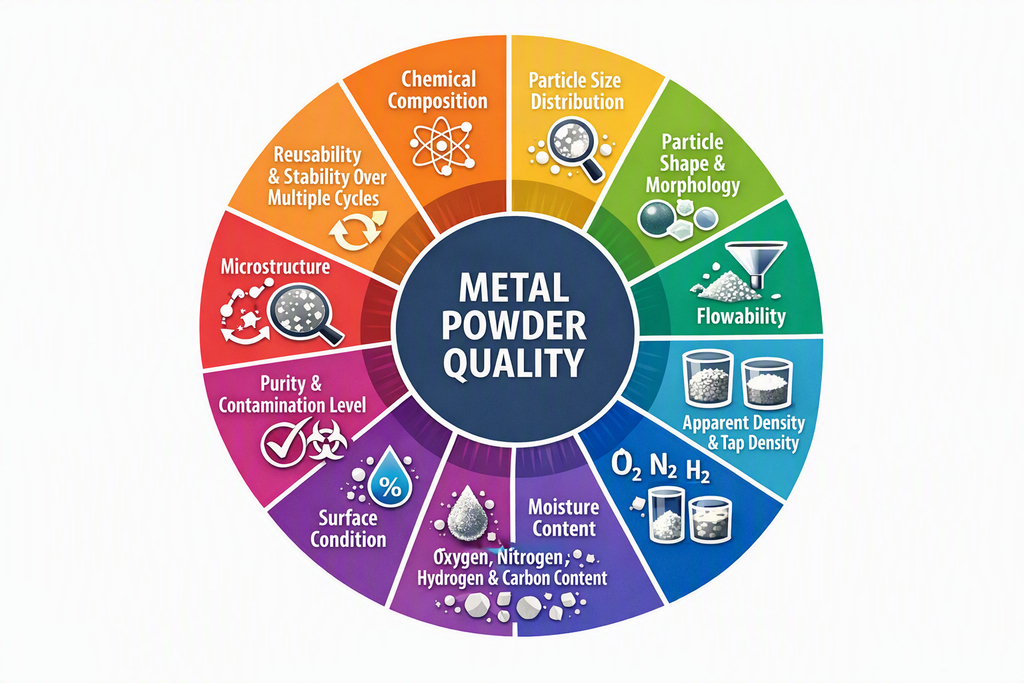
Knowing this basic rule helps you make better choices about powder selection and quality control. It leads to more reliable manufacturing results. Figure 1 illustrates some basic metal powder qualities users should be aware of.
3. Metal Powder: Reuse vs. Recycling – Understanding the Difference
Metal powder management in manufacturing uses two main approaches: reuse and recycling. These terms sound similar but mean different things. Knowing the difference helps you make better choices when managing powder.
Reuse means using leftover powder from manufacturing again for the same or a similar job. Workers collect unmelted or unused powder, sieve it to remove large pieces or dirt, blend it with fresh powder, and test it to make sure it still meets quality standards. For example, in laser powder bed fusion (LPBF), much powder remains unmelted after each build. Workers collect, sieve, and blend this powder with new powder before putting it back into the machine for the next cycle. This simple process helps reduce waste and keeps production efficient.
Recycling goes a step further than reuse. Workers take powder that is damaged, dirty, or no longer meets standards and put it through a more complex process. They may remelt, refine, or re-atomize the powder to make it usable again. For example, if titanium powder no longer meets quality standards, workers can combine, remelt, and re-atomize it to produce fresh powder. Recycling is important for expensive or critical materials because throwing away bad powder costs money and harms the environment.
4. Metal Powder Recycling
As industries increasingly adopt advanced manufacturing technologies like additive manufacturing (AM), powder metallurgy (PM), and thermal spray coatings, the demand for high-quality metal powders has skyrocketed. However, not all powder used in these processes ends up in the final product. In fact, in many additive manufacturing processes, only 5–20% of the powder in a build chamber is actually melted into parts – leaving a significant volume of unused powder behind [1].
This raises a critical question: What happens to the leftover powder?
The answer lies in metal powder recycling — a practice that is not only economically smart but also environmentally essential. This blog explores what metal powder recycling is, how it works, why it matters, and the challenges it presents.
4.1 What Is Metal Powder Recycling?
Metal powder recycling is the process of collecting, reconditioning, testing, and reusing metal powders that were not consumed in a manufacturing process. Instead of discarding unused or partially degraded powder, manufacturers recover it, restore its quality where possible, and reintroduce it into production cycles [2-6]. The next sections (4.1 and 4.2) explain the main benefits and challenges of metal powder recycling.
4.2 Advantages of Metal Powder Recycling
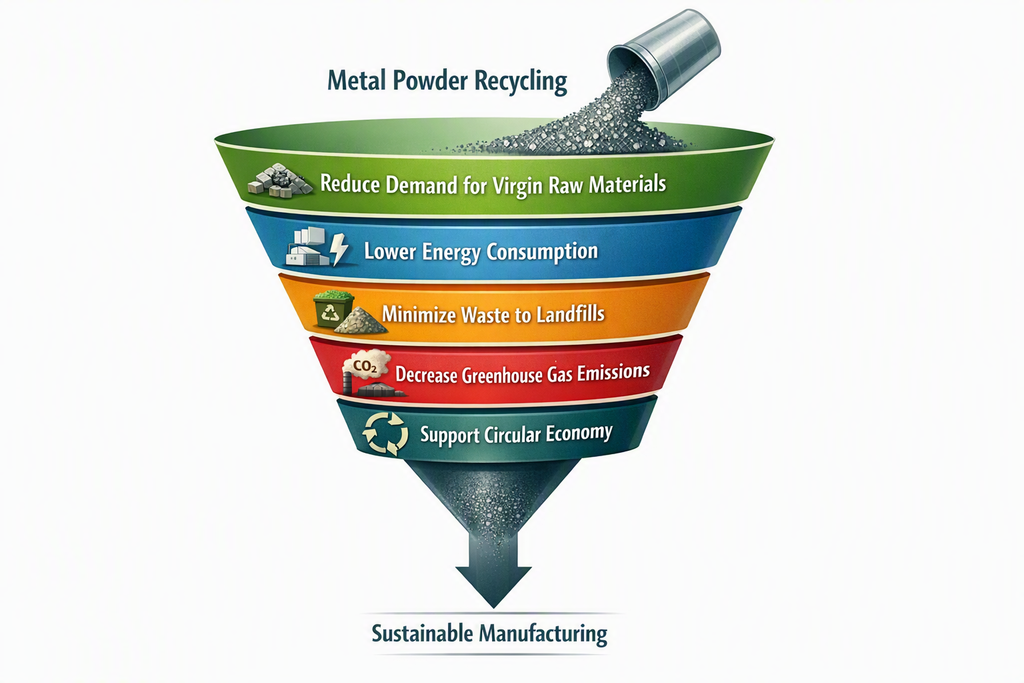
Metal powder recycling gives many benefits beyond saving money. When manufacturers recycle well, they help both their business and the environment. Here are the main reasons why metal powder recycling is important for sustainable manufacturing (see Figure 2).
4.2.1 Reducing Demand for Virgin Raw Materials
A major benefit of metal powder recycling is that it reduces the need for new raw materials. Mining new metals is expensive and harmful to the environment. When manufacturers reuse metal powders, they rely less on new resources and help protect the environment for the future. Recycling also helps keep material prices stable, even when markets change.
4.2.2 Lowering Energy Consumption
Making new metal powders uses a lot of energy. Mining, refining, and moving the powders all add to this energy use. When manufacturers recycle and reuse metal powders, they skip many of these steps and save energy. In fact, recycling can use up to 50% less energy than producing new powder, making it a smart, green choice
4.2.3 Minimizing Waste Sent to Landfills
In traditional manufacturing, unused or damaged metal powders often become waste and fill up landfills. Metal powder recycling solves this problem. When manufacturers reuse and fix old powder, they make less waste. This helps keep landfills cleaner and supports zero-waste goals.
4.2.4 Decreasing Greenhouse Gas Emissions
Climate change is a major problem, and manufacturing emits a lot of greenhouse gases into the atmosphere. Metal powder recycling helps lower these emissions. By conserving energy and reducing transport, recycling makes manufacturing cleaner. Each batch of recycled powder helps create a greener planet. Manufacturers who recycle show they care about the environment.
4.2.5 Supporting Circular Economy Principles
Metal powder recycling aligns with the principles of a circular economy. Instead of using materials once and throwing them away, a circular economy keeps materials in use. Recycling metal powders means manufacturers use the same materials again and again. This saves resources and helps the whole industry become more sustainable [13].
4.3 Challenges in Metal Powders Recycling
While metal powder recycling holds immense promise for reducing costs and waste in additive manufacturing, it is far from straightforward. The journey from used powder back to production-ready feedstock is riddled with technical, logistical, and regulatory hurdles that manufacturers must carefully navigate. Let’s take a closer look at the most pressing challenges facing the industry today. Figure 3 illustrates key challenges the industry currently faces in metal powder recycling.
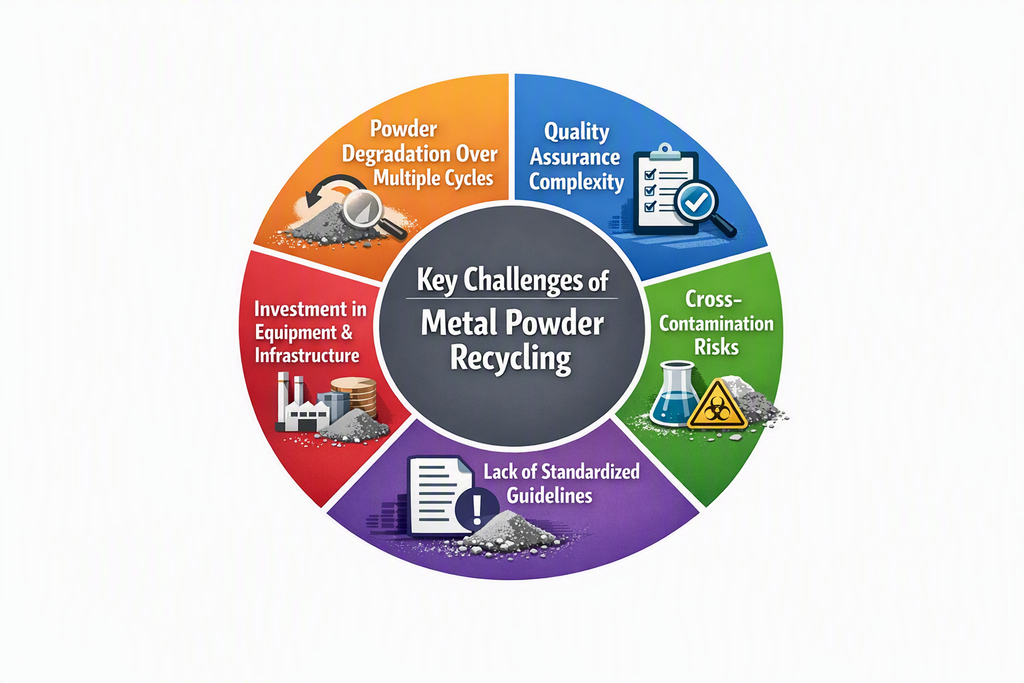
Figure 3: Key Challenges in Metal Powder Recycling
4.3.1 Powder Degradation Over Multiple Cycles
A major problem with powder recycling is that the powder degrades each time it is reused by manufacturers. Heat, air, and handling change the powder, making it less useful. More oxygen and nitrogen can enter the powder, weakening the final parts [7]. As manufacturers reuse the powder, it loses its round shape. Small particles stick to larger ones, causing the powder to flow and pack unevenly during printing.
Each time manufacturers reuse the powder, they lose fine particles and larger particles build up. These changes affect how the powder melts and packs, and this can cause problems with the final product. Thin layers of rust may also form on the powder, making it harder for manufacturers to melt it. Over time, the mix of metals in the powder can change as some parts evaporate. For example, in a common titanium alloy, the oxygen content slowly increases with each reuse. After many cycles, this can make the metal too weak for important uses [8].
4.3.2 Quality Assurance Complexity
Manufacturers find it hard to maintain the same quality of recycled powder each time they reuse it. New powder comes with a certificate, but recycled powder has a long history. To ensure the recycled powder remains good, manufacturers must test it every time. They check the size, flow, mix, and shape of the powder. These tests take a lot of time and money, which can reduce the savings from recycling.
Manufacturers must track each batch of powder, including how many times it was used, where it was used, how it was stored, and whether it was mixed with other powders. They also need to watch for gradual changes in quality that can appear over time. Manufacturers must set clear rules for when to keep using a powder or when to throw it out. These steps make quality checks for powder recycling very complex and costly [9].
4.3.3 Cross-Contamination Risks
Cross-contamination is a hidden danger in powder recycling. If workers do not handle powders carefully, they can mix unwanted substances into the batch. Metals from other machines or jobs can get into a batch and change its makeup. Debris, partially melted powders, and leftover particles from the manufacturing process can also mix in. Moisture and air always pose a risk, especially for metals like titanium and aluminum, which readily absorb oxygen and water without protection. Even small amounts of oil from hands or cleaning chemicals can lower powder quality and hurt the final product. Even a small amount of foreign material can ruin a whole batch and turn savings into big losses [10].
4.3.4 Investment in Equipment and Infrastructure
Starting a good powder recycling process is expensive. Companies must buy specialized machinery and set up the right spaces, which can be challenging for smaller businesses. Workers use machines such as vibratory or ultrasonic sieves to remove large clumps or debris from used powder. For metals like titanium and aluminum, workers use special boxes filled with safe gas to keep out air and water. Technicians use extra tools, such as particle analyzers and microscopes, to check the powder’s quality. Workers store powders in rooms with controlled temperature and moisture. Companies also use specialized software to track each batch of powder over time. All these steps are costly, so businesses must decide whether the savings from recycling justify the large investment [11].
4.3.5 Lack of Standardized Guidelines
Another major problem is that no single set of rules governs powder recycling. Some companies and labs have made their own rules, but industry groups have not agreed on important questions. Experts disagree on how many times manufacturers can reuse powder or when they should discard it. Industry groups have not set rules for mixing old and new powders or for how often to test recycled powders. This lack of standard rules causes confusion, makes recycling harder, and creates extra problems for companies that must follow strict laws, such as those in the aerospace or medical fields.
The good news is that groups such as ASTM International, ISO, and NIST are working to develop these rules [12]. Until groups set clear, widely accepted guidelines, companies must rely on their own know-how, research, and safe limits to manage powder recycling.
5. The Future of Metal Powder Recycling
New technologies are rapidly changing the future of metal powder recycling [13,14]. Engineers now use artificial intelligence and machine learning to monitor powders. These tools predict when powder breaks down, decide whether to use, mix, or reject powder, and even create computer models of a powder’s life cycle. Technicians also add sensors to manufacturing machines. These sensors monitor powder quality in real time and analyze the size and shape of powder particles.
Closed-loop recycling systems are making a big difference. These automated machines collect, clean, test, and reuse powder without human help. Factory workers can easily install them and keep the powder clean [15]. Technicians use advanced re-atomization to turn even damaged powders back into high-quality material [16].
Tracking and protecting the environment are also important. Engineers use blockchain systems to create digital records for each batch of powder. These records show where the powder comes from and where it goes, helping companies comply with regulations and improve safety [17]. Recycling now connects to green goals, and organizations earn rewards for successful recycling [18]. Researchers are also developing new ways to measure the environmental impact of powder recycling.
In the future, scientists aim to create new metals that are easy to recycle. Some of these metals will tolerate higher oxygen levels, repair themselves, or remain strong after repeated use [19]. Organizations such as ASTM International and ISO are also developing new rules for reusing metal powders. These rules will guide everyone in following the same steps, making recycling safer and better. These innovations help make metal powder recycling smarter, greener, and more efficient [20].
Summary
Modern manufacturing relies on metal powders, which play key roles across many industries, including powder metallurgy, additive manufacturing, coatings, electronics, and high-performance engineering. Many factors determine the quality of these powders, including their chemical composition, particle size and shape, flowability, density, gas content, and contamination. Each property affects how the powder works during processing and the quality of the final product.
Manufacturers achieve high-quality metal powder by choosing the right production method. However, they must also measure, monitor, and control powder quality during production. Even small changes in powder properties can affect reliability, part performance, safety, and costs.
Reusing and recycling metal powders help the environment and save money. Manufacturers who reuse leftover powder and recycle damaged material reduce waste, use fewer new metals, protect the environment, and save money. However, recycling brings challenges. Manufacturers must manage recycling carefully to avoid contamination, oxidation, safety issues, and quality loss, all of which can harm the final product.
References
- Gibson, I., Rosen, D., Stucker, B., and Khorasani, M.: Additive Manufacturing Technologies. 3rd ed., Springer, 2021.
DOI: https://doi.org/10.1007/978-3-030-56127-7 - Ardila, L. C., Garciandia, F., González-Díaz, J. B., et al. „Effect of IN718 recycled powder reuse on properties of parts manufactured by means of selective laser melting.“ Physics Procedia, 56, 2014, 99–107.
DOI: https://doi.org/10.1016/j.phpro.2014.08.152 - Tang, H. P., Qian, M., Liu, N., Zhang, X. Z., Yang, G. Y., and Wang, J. „Effect of powder reuse times on additive manufacturing of Ti-6Al-4V by selective electron beam melting.“ JOM, 67, 2015, 555–563.
DOI: https://doi.org/10.1007/s11837-015-1300-4 - Grainger, L. „Recycling of metal powders in additive manufacturing.“ Metal Powder Report, 73, 5, 2018, 281–284.
DOI: https://doi.org/10.1016/j.mprp.2018.01.003 - Heiden, M. J., Deibler, L. A., Rodelas, J. M., et al. „Evolution of 316L stainless steel feedstock due to laser powder bed fusion process.“ Additive Manufacturing, 25, 2019, 84–103.
DOI: https://doi.org/10.1016/j.addma.2018.10.019 - Seyda, V., Kaufmann, N., and Emmelmann, C. „Investigation of aging processes of Ti-6Al-4V powder material in laser melting.“ Physics Procedia, 39, 2012, 425–431.
DOI: https://doi.org/10.1016/j.phpro.2012.10.057 - Cordova, L., Bor, T., de Smit, M., Macías, J.G., & Rabeeh (2020). „Effects of Powder Reuse on the Microstructure and Mechanical Behaviour of Al–Mg–Sc–Zr Alloy Processed by Laser Powder Bed Fusion (LPBF).“ Additive Manufacturing, 36, 101625.
DOI: https://doi.org/10.1016/j.addma.2020.101625 - Tang, H.P., Qian, M., Liu, N., Zhang, X.Z., Yang, G.Y. & Wang, J. (2015). „Effect of Powder Reuse Times on Additive Manufacturing of Ti-6Al-4V by Selective Electron Beam Melting.“ JOM, 67(3), pp. 555–563.
DOI: https://doi.org/10.1007/s11837-015-1300-4 - Strondl, A., Lyckfeldt, O., Brodin, H. & Ackelid, U. (2015). „Characterization and Control of Powder Properties for Additive Manufacturing.“ JOM, 67(3), pp. 549–554.
DOI: https://doi.org/10.1007/s11837-014-1247-x - Spierings, A.B., Voegtlin, M., Bauer, T. & Wegener, K. (2016). „Powder Flowability Characterisation Methodology for Powder-Bed-Based Metal Additive Manufacturing.“ Progress in Additive Manufacturing, 1(1–2), pp. 9–20.
DOI: https://doi.org/10.1007/s40964-015-0001-4 - O’Leary, R., Setchi, R., Prickett, P. & Geraint, M. (2019). „An Investigation into the Recycling of Ti-6Al-4V Powder Used Within SLM to Improve Sustainability.“ SDM 2019: Sustainable Design and Manufacturing, pp. 377–388.
DOI: https://doi.org/10.1007/978-981-13-9271-9_31 - Moghimian, P., Poirié, T., Habibnejad-Korayem, M., Zavati, J.A., Kunber, J., Bhatt, U.M., Beyers, D.Y. & Tian, Y. (2021). „Metal Powders in Additive Manufacturing: A Review on Reusability and Recyclability of Common Titanium, Nickel and Aluminum Alloys.“ Additive Manufacturing, 43, 102017.
DOI: https://doi.org/10.1016/j.addma.2021.102017 - DebRoy, T., Wei, H.L., Zuback, J.S., Mukherjee, T., Elmer, J.W., Milewski, J.O., Beese, A.M., Wilson-Heid, A., De, A. & Zhang, W. (2018). „Additive Manufacturing of Metallic Components – Process, Structure and Properties.“ Progress in Materials Science, 92, pp. 112–224.
DOI: https://doi.org/10.1016/j.pmatsci.2017.10.001 - Frazier, W.E. (2014). „Metal Additive Manufacturing: A Review.“ Journal of Materials Engineering and Performance, 23(6), pp. 1917–1928.
DOI: https://doi.org/10.1007/s11665-014-0958-z - Popov, V.V., Katz-Demyanetz, A., Garkun, A. & Bamberger, M. (2018). „The Effect of Powder Recycling on the Mechanical Properties and Microstructure of Electron Beam Melted Ti-6Al-4V Specimens.“ Additive Manufacturing, 22, pp. 834–843.
DOI: https://doi.org/10.1016/j.addma.2018.06.003 - Sun, P., Fang, Z.Z., Zhang, Y. & Xia, Y. (2017). „Review of the Methods for Production of Spherical Ti and Ti Alloy Powder.“ JOM, 69(12), pp. 1853–1860.
DOI: https://doi.org/10.1007/s11837-017-2513-5 - Mandolla, C., Petruzzelli, A.M., Percoco, G. & Urbinati, A. (2019). „Building a Digital Twin for Additive Manufacturing through the Exploitation of Blockchain: A Case Analysis of the Aircraft Industry.“ Computers in Industry, 109, pp. 134–152.
DOI: https://doi.org/10.1016/j.compind.2019.04.011 - Paris, H., Mokhtarian, H., Coatanéa, E., Museau, M. & Ituarte, I.F. (2016). „Comparative Environmental Impacts of Additive and Subtractive Manufacturing Technologies.“ CIRP Annals, 65(1), pp. 29–32.
DOI: https://doi.org/10.1016/j.cirp.2016.04.036 - Miracle, D.B. & Senkov, O.N. (2017). „A Critical Review of High Entropy Alloys and Related Concepts.“ Acta Materialia, 122, pp. 448–511.
DOI: https://doi.org/10.1016/j.actamat.2016.08.081 - ASTM International. (2021). ASTM F3318-18: Standard for Additive Manufacturing – Finished Part Properties – Specification for AlSi10Mg with Powder Bed Fusion – Laser Beam. ASTM International, West Conshohocken, PA.
DOI: https://doi.org/10.1520/F3318-18